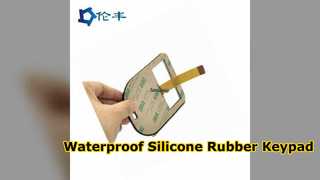
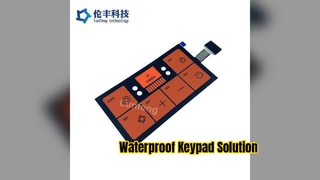
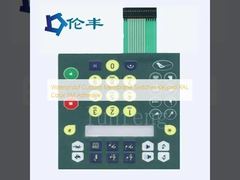
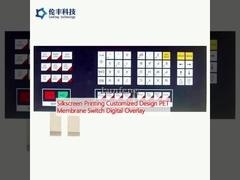
Brief: This video provides a detailed walkthrough of the Gray LEDs FPC Membrane Switch with embossed tactile buttons. You will see a demonstration of its construction, learn about the advantages of using FPC circuits for high-LED-count applications, and get insights into its reliable performance in various industrial and consumer electronics environments.
Related Product Features:
Features a flexible printed circuit (FPC) for stable LED soldering and high-density conductor layouts.
Incorporates embossed tactile buttons for a positive feedback user experience.
Offers gold-plated contact pads and fingers on the FPC circuit for enhanced conductivity and reliability.
Supports fine conductor pitches down to 0.5mm, ideal for compact and complex designs.
Designed for a long operational life, with tactile switches rated for over 1,000,000 cycles.
Operates reliably across a wide temperature range from -40°C to +80°C.
Suitable for diverse applications including industrial controls, medical devices, and home appliances.
Provides low contact resistance and high insulation resistance for consistent electrical performance.
Les questions:
What are the advantages of using an FPC circuit in this membrane switch?
The FPC circuit provides more stable LED soldering quality, especially when many LEDs are required, and supports finer conductor pitches like 0.5mm without short circuit risks, offering better stability and lower resistance compared to PET circuits.
What is the typical lifespan of the tactile switch keypad?
The tactile type membrane switch is rated for a life cycle of 1,000,000 actuations or more, ensuring long-term reliability in demanding applications.
In what environments can this membrane switch operate?
It is designed to operate in temperatures from -40°C to +80°C and can withstand high humidity conditions, making it suitable for various industrial, medical, and consumer electronic applications.